In late June, I took part in a 10-day trip to visit small towns and villages in Belgium. I liked the idea of exploring small villages I might never see otherwise, for work or fun, but Europe was experiencing a record-breaking heatwave this year. Walking through these towns in the intense heat, I found the warmth and scenery merging. My thoughts wandered, and different soundscapes came to mind. Despite the heatwave, I was reminded that travel experiences and music are often closely intertwined.
#331 Magnificent Flute Melody that Emerged amid Heat
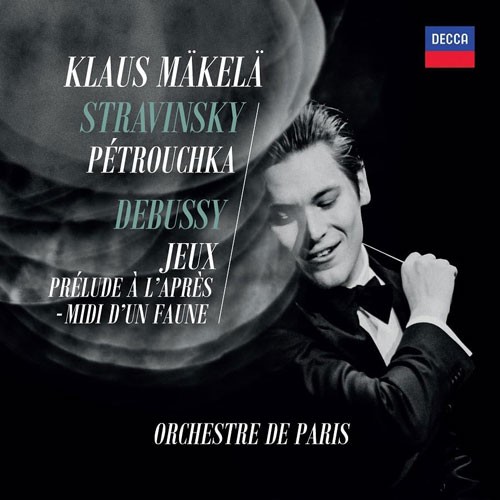
Debussy: Prélude à l'après-midi d'un faune / Klaus Mäkelä, Orchestre de Paris
(Universal Music UCCD-45026)
Located 60 kilometers, or about an hour’s drive, west of the capital Brussels, Sint-Martens-Latem is a small village recognized as one of “Europe’s Most Beautiful Villages” and known as an “artists’ village” that has attracted numerous painters. As I walked past the elegant houses dotted among the deep greenery, I found myself surrounded by a small lake and lush foliage, and I felt as if time had stood still.
At that moment, the melody of “Prélude à l'après-midi d'un faune,” composed by the Impressionist composer Claude Debussy, came to mind. Based on a poem by Stéphane Mallarmé, this piece is one of Debussy’s most famous works and helped establish his reputation. “One summer afternoon, a half-beast satyr awakens from a nap and, still half-asleep, chases after water nymphs, lost in a sensual reverie. The illusion slips through his fingers, and once again the satyr sinks back into slumber…” The flute melody emerged amid the overwhelming heat. As a masterpiece, it has inspired many outstanding performances. Still, I’d recommend listening to the new recording by the Orchestre de Paris, conducted by Klaus Mäkelä, a young conductor who has garnered worldwide attention. I think the Japanese-press CD, which pairs this piece with works like Stravinsky’s <Pétrouchka> and is released as an MQA-UHQCD with Green Color Label Coat, offers the best sound quality available.
#332 Bold “Summertime”: Inspired by the City of Saxophones
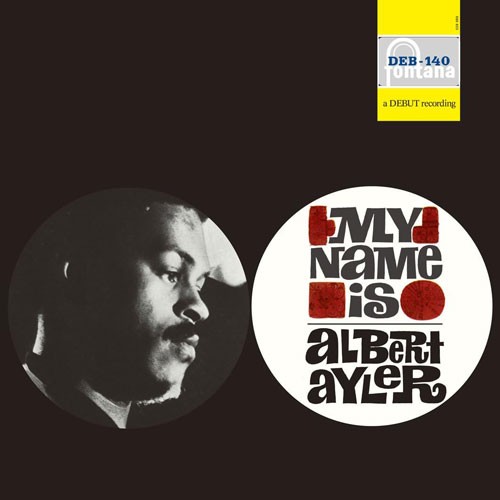
Summertime ~ MY NAME IS ALBERT AYLER
(Debut ⇒ Fontana, CD ⇒ [Japanese Edition] Musak MZCB-1213, LP ⇒ [Japanese Edition] Think THLP-135)
I also visited Dinant, a town much farther south, close to the French border. Dinant has a long history and is also where Adolphe Sax, the inventor of the saxophone (November 1814 – February 1894), was born. You can still visit his birthplace today. Dinant is a small town that appears to cling to a cliff with a citadel on top. Near Rue Adolf Sax, a bridge spanning the Moose River is adorned with as many as 12 colorful saxophone monuments, each about 3 meters tall.
As I was looking at that scene, the melody of “Summertime” suddenly popped into my head. It was an abstract rendition of “Summertime” performed by Albert Ayler, known as a “free jazz warrior.” I have already talked about great performances of “Summertime” in No. 19 of this column (♯59、♯60、♯61), but Albert Ayler’s version is probably the boldest and most unconventional. Ayler’s <Summertime> is best appreciated during sweltering summer heat. Although the saxophone evolved alongside jazz, Adolphe Sax surely could never have imagined that such a style of expression would emerge 100 years after he invented the instrument. “MY NAME IS ALBERT AYLER” has been reissued in multiple formats. The LP released in Japan in 2010 closely resembles the original, although it may now be difficult to acquire. Of course, you can also fully appreciate the brilliance of Ayler’s playing on CD.
#333 “Django,” Perfect Fit for Village that Retains Its Medieval Charm
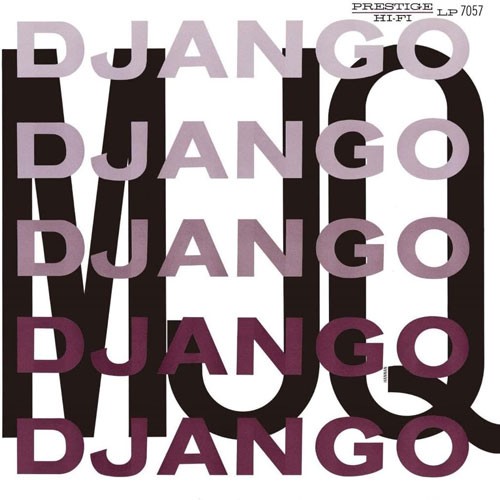
Django / MJQ (The Modern Jazz Quartet)
(Universal Music UCCO-46037)
Durbuy, near Dinant, is often called “the smallest village in the world,” and it takes just over 10 minutes to walk through the village center. Tall uildings don’t exist; instead, narrow alleys are lined with stone houses that have a medieval atmosphere, with small restaurants and souvenir shops scattered among them.
As I walked along the village paths, which attract visitors from all over Europe, a melody suddenly came to mind for no clear reason. It was < Django,> made famous by the MJQ (Modern Jazz Quartet). The piece composed by the MJQ pianist John Lewis as a tribute to the Belgian-born guitarist Django Reinhardt came into consideration, maybe since the refined style of Lewis, who longed for Europe, fitted so well with the atmosphere of this village, which still has a medieval character. This album is among the many reissued on numerous occasions. The UHQCD version released last autumn allows us to hear music recorded over 70 years ago with even greater clarity.
About the Author

Masamichi Okazaki
Surrounded by various kinds of music from his childhood, Masamichi Okazaki joined Waseda University Modern Jazz Club. He started contributing articles to music magazines when he was a student. He covers wide range of music not only trad, modern and contemporary jazz, but also from pops to classics. He writes liner notes for CDs and LPs, and is a regular contributor to “JAZZ JAPAN,” “STEREO,” and others. He joined a big band, “Shiny Stockings,” as a saxophone player. He is a director of The Music Pen Club Japan (MPCJ).